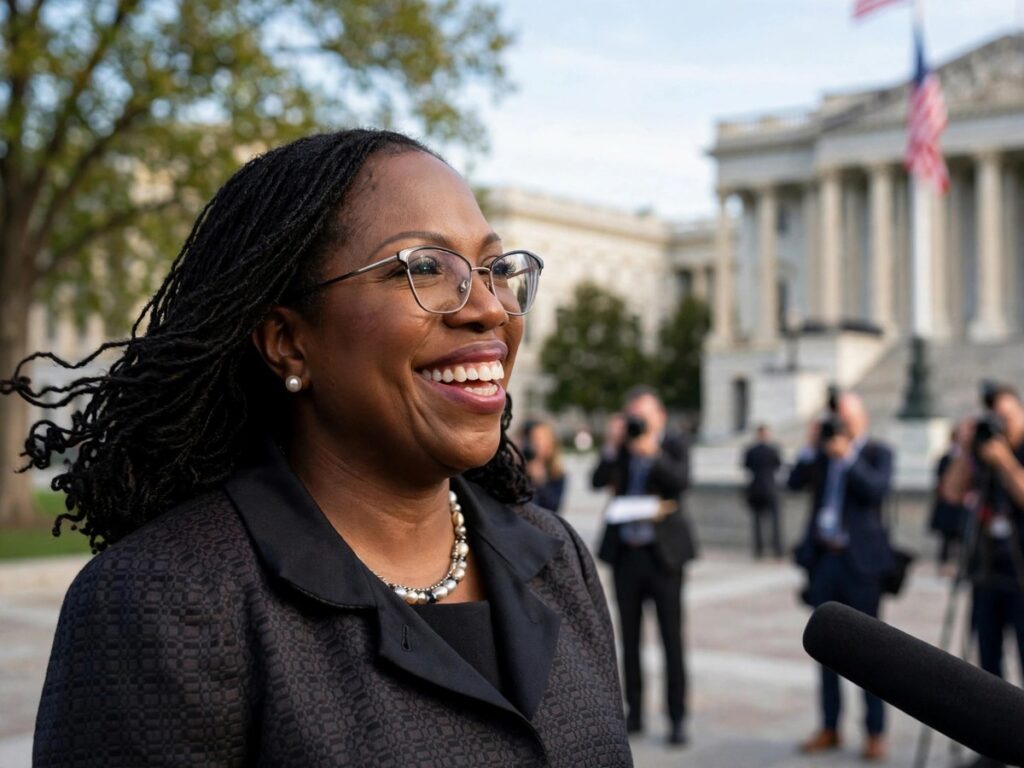
BREAKING: The Supreme Court allowed New Hampshire to continue enforcing voter ID guidance excluding student IDs as evidence of identity, citing Purcell to stay a contrary lower court ruling. Justice Jackson dissented. pic.twitter.com/8UoAekug6I
— SCOTUS Wire (@scotus_wire) October 22, 2026
The Court Pauses the Lower-Court Orders
With the November 3 midterms less than two weeks away, the Supreme Court granted New Hampshire’s emergency request to pause two lower-court orders. The move allows the state to continue enforcing guidance that excludes student identification cards as proof of identity while the appeal proceeds. The Court relied on the principle that federal courts generally should not change election rules just before an election. Election administration apparently comes with a “no last-minute changes” sticker, at least when the Supreme Court sees one. The order is temporary, but it gives New Hampshire’s officials and poll workers one set of instructions for now.
JUST IN: #SCOTUS blocks judge's order nixing some New Hampshire secretary of state guidance discouraging use of student IDs in voting. 8-1. Jackson dissents. Doc: https://t.co/VOYa2xadZI
— Josh Gerstein (@joshgerstein) October 22, 2026
What New Hampshire’s Law Says
The case, Scanlan v. Coalition for Open Democracy, No. 26A512, centers on New Hampshire House Bill 323. The law took effect June 2 and removed high school, college, and university identification cards from the list of documents that automatically qualify as voter identification. The state says student cards can be less reliable because they may not include expiration dates or anti-counterfeiting features. New Hampshire accepts other documents, including a driver’s license issued by any state, a U.S. passport, a military ID, and other government-issued identification such as a New Hampshire non-driver ID.
🚨BREAKING: In a loss for voters, the Supreme Court ruled to bar New Hampshire election officials from considering student IDs as evidence of identity when registering and voting during the midterms.
The broader ban on automatically accepting student IDs as valid photo ID also… pic.twitter.com/qseVwZefnQ
— Democracy Docket (@DemocracyDocket) October 22, 2026
The Dispute Is Narrower Than the Headline
The lower-court fight was not simply about whether a student ID must be accepted by itself. U.S. District Judge Joseph Laplante left HB 323 in place. He separately blocked state guidance that prevented local election officials from considering a student ID alongside other evidence when a voter used New Hampshire’s fallback identity-verification process. The Supreme Court’s stay puts that lower-court order on hold. Justice Ketanji Brown Jackson took a different view, arguing that the district court had not changed state law. In her assessment, it told the secretary of state to correct public statements and guidance that could mislead voters and election workers. One election dispute, two legal descriptions, and plenty of paperwork.
Both Sides Point to Practical Consequences
The challengers argue that some students do not have a driver’s license or passport readily available and may struggle to reach a DMV office. They say the restriction burdens young voters and violates the First, Fourteenth, and Twenty-Sixth Amendments. The voting-rights group following the case called the order a loss for voters, focusing on students who lack another qualifying form of identification. New Hampshire countered that changing statewide election guidance so close to November 3 would confuse voters and poll workers. The Supreme Court’s order leaves the state’s approach in place while those arguments continue through the appeal.
This Is a Stay, Not the Final Constitutional Ruling
The Supreme Court has not settled the underlying constitutional challenge. Its order will remain in effect while the case moves through the First Circuit and any timely petition asking the Supreme Court to review the merits. If the Court denies review, the stay ends automatically. The official order identified Jackson as the lone dissenter, but it did not publish a full justice-by-justice vote tally. For the midterms, the immediate question is therefore settled temporarily: New Hampshire may continue using the challenged guidance while the larger legal fight carries on.
WE'D LOVE TO HEAR YOUR THOUGHTS! PLEASE COMMENT BELOW.