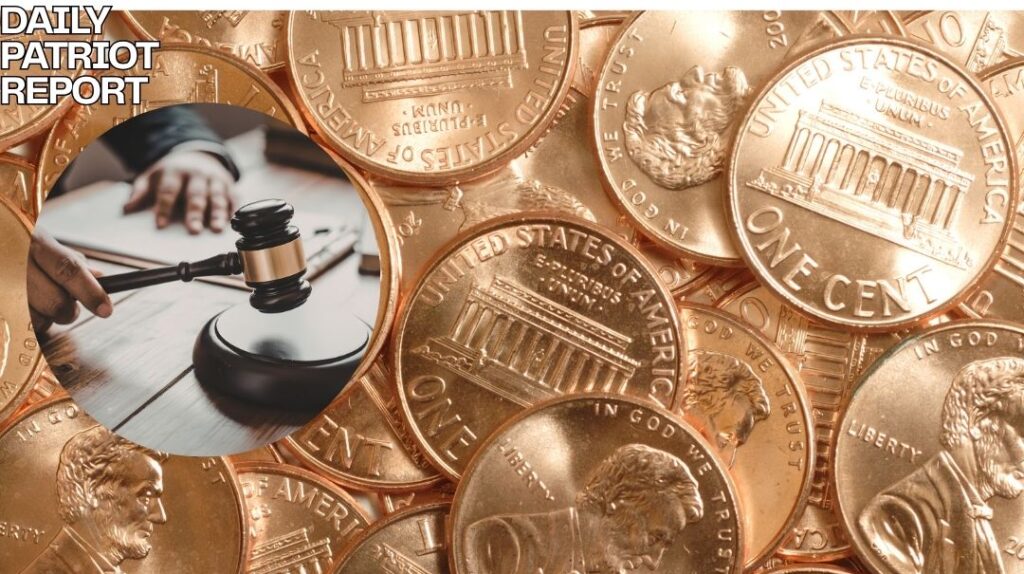
It has been roughly eight months since the United States government minted its last penny. This halt in production created a massive coin shortage that left small businesses struggling to make exact change. Fortunately, a new bill passed by the House of Representatives aims to relieve this widespread confusion.
The proposed legislation is officially known as the Common Cents Act. It formally ends all penny production and provides clear guidelines for retailers lacking coins in the till. This common-sense measure could also eventually lead to the creation of a new nickel.
Retailers across the country have been warning cash-paying customers that exact change is unlikely. Businesses have been forced to get creative to pass along what consumers are owed. Some desperate shop owners have even resorted to offering gift cards or free merchandise to cover the difference.
I am pleased to see the Common Cents Act pass the House. This fiscally responsible legislation ensures taxpayer dollars are protected while providing certainty for businesses in their cash transactions with customers. pic.twitter.com/GhcoBj4CG3
— Frank Lucas (@RepFrankLucas) July 16, 2026
Other retailers simply started rounding transaction totals up or down to keep lines moving. However, this practical business solution can quickly lead to aggressive legal challenges. Overregulation at the local level has made navigating the coin shortage a total nightmare for merchants.
Several states and localities enforce strict laws that prohibit businesses from rounding cash transactions. The National Association of Convenience Stores warned lawmakers about this legal trap last year. The group sent a letter to the Senate Banking and House Financial Services Committees to demand federal clarity.
Conflicting payment regulations make the situation even more difficult for local job creators. Dylan Jeon of the National Retail Federation previously explained that some laws prevent merchants from charging different amounts based on tender. This means someone paying with a SNAP EBT card cannot legally face a different total than a cash-paying customer.
Under the new Common Cents Act, businesses would finally get a legal option to round cash transactions to the nearest nickel. A purchase ringing up at $19.82 would simply become $19.80 at the register. Meanwhile, a transaction totaling $19.83 would logically round up to $19.85.
This deregulatory approach is not an entirely new concept for North American markets. Canada successfully implemented a similar policy when it phased out its own penny in the early 2010s. The move streamlined commerce and reduced costly headaches for everyday merchants.
Making cents no longer makes sense, says the Treasury Department. Here’s what you should know. https://t.co/HWMUvCcarz
— U.S. News & World Report (@usnews) May 24, 2025
Lawmakers designed the bill to exclusively impact traditional physical currency exchanges. The rounding rules would only apply to purchases made with actual cash. Transactions handled by check, mobile payment, or credit card would remain entirely unaffected.
Despite the halt in production, existing pennies would remain valid legal tender under the new legislation. Experts estimate that more than 300 billion pennies are currently circulating or hiding in couch cushions worldwide. That equals roughly $8 worth of copper Lincolns for every single American citizen.
The Common Cents Act still faces hurdles before it can officially become the law of the land. The legislation must clear the Senate and secure a presidential signature to take effect. Its future in the upper chamber remains uncertain as businesses wait for much-needed relief.